



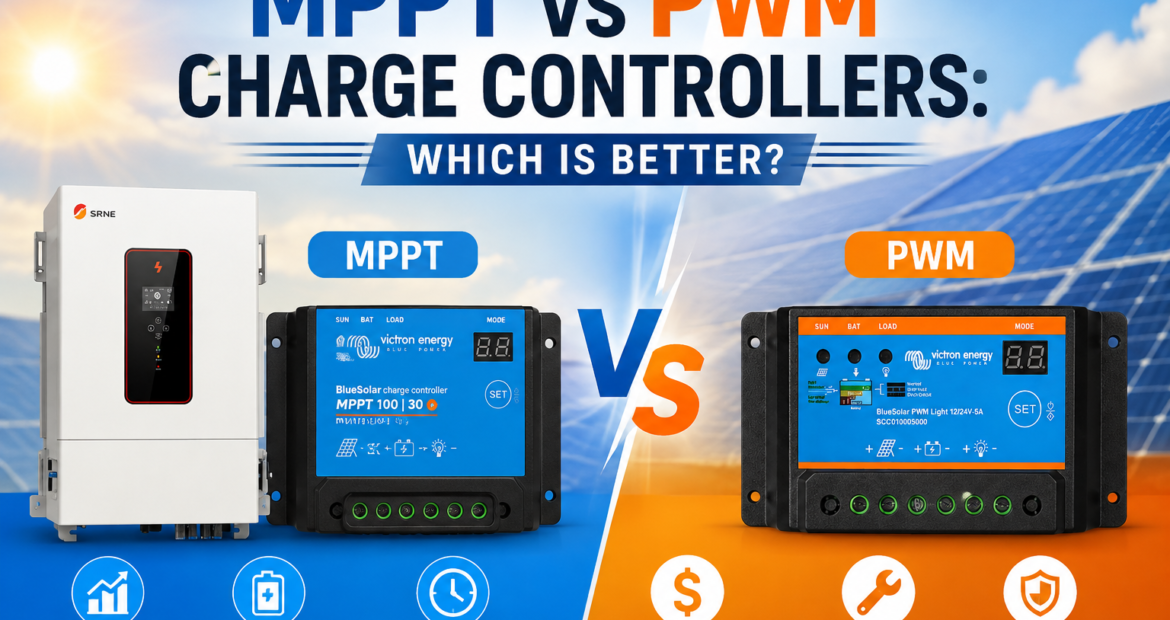
MPPT vs PWM Charge Controllers Explained
Choosing the right charge controller is an important part of designing a reliable solar power system. The charge controller regulates the electricity flowing from your solar panels to your batteries, helping protect them and ensure they are charged correctly.
At Gold Weather LTD, we help homes and businesses in Nigeria choose and install solar systems that match their energy needs. Two of the most common charge controllers are MPPT and PWM. While both perform the same basic function, they work differently and offer different levels of efficiency and performance.
So, which is better: MPPT or PWM?
In most larger residential and off-grid solar systems, MPPT controllers offer greater efficiency and flexibility. PWM controllers, however, can be a practical and affordable choice for smaller, simpler installations.
This guide explains how both technologies work, their key differences, and how to choose the right solar charge controller for your home or business in Nigeria.
What Is a Solar Charge Controller?
A solar charge controller is a device installed between your solar panels and batteries. Its primary job is to regulate the voltage and current going into the battery during charging.
Without proper regulation, a solar panel could potentially send too much voltage or current to a battery, leading to overcharging and reduced battery life.
A charge controller can:
- Regulate the charging process
- Prevent battery overcharging
- Help prevent excessive battery discharge
- Protect against certain electrical faults
- Improve battery charging performance
- Monitor and manage energy flowing through the system
The two main technologies used in many solar systems are Pulse Width Modulation (PWM) and Maximum Power Point Tracking (MPPT).
What Is a PWM Charge Controller?
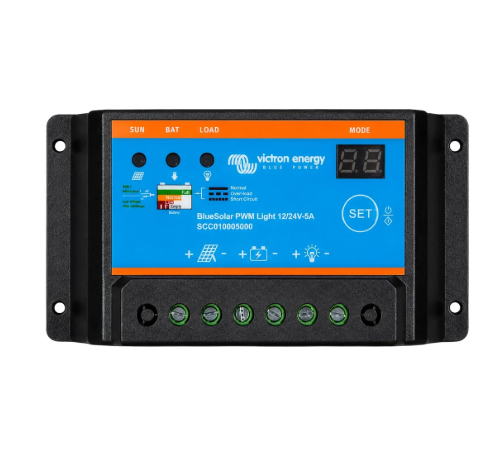
PWM stands for Pulse Width Modulation. A PWM charge controller regulates the power sent to the battery by rapidly switching the connection between the solar panel and battery. As the battery approaches full charge, the controller adjusts the charging process to maintain the appropriate voltage.
In simple terms, it works like a fast charge switch that matches the battery’s needs. When the battery is low, it conducts more current, so it charges faster. Likewise, when the battery is nearly full, it stops fast charging and lets less energy through to the battery. This helps protect the battery from overcharging and keeps it working safely.
PWM charge controllers make the solar panel operate at the battery’s voltage. For example, a 12V panel can produce more than 12V, but a PWM controller reduces the voltage to match the battery. The extra potential is lost rather than converted into additional charging power.
Advantages of PWM Charge Controllers
PWM controllers have several advantages, especially for simple and smaller solar systems:
- Lower upfront cost: PWM controllers are generally more affordable than MPPT controllers, making them a budget-friendly option.
- Simple technology: They use a straightforward charging method with fewer complex components.
- Reliable for basic solar systems: PWM controllers can provide dependable battery charging when the solar panel and battery voltages are properly matched.
- Suitable for smaller installations: They work well for small systems with modest power requirements.
- Easy to install and maintain: Their simple design makes them relatively easy to set up, operate, and maintain.
With these advantages, PWM controllers can make sense for smaller solar systems where the solar panel and battery voltages are compatible. They may also be a good choice if low cost is a priority.
Limitations of PWM Controllers
The main limitation of PWM controllers is that they cannot get the maximum power available from the solar panels.
This means they may produce less energy than an MPPT controller, especially when the panel voltage is much higher than the battery voltage or when weather conditions change. Over time, this can mean less energy is available to charge your batteries and power your appliances.
What Is an MPPT Charge Controller?
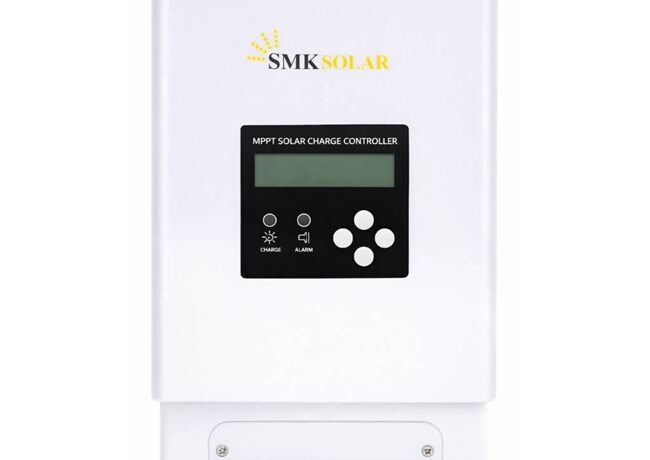
MPPT stands for Maximum Power Point Tracking. An MPPT controller monitors the solar panel’s voltage and current to determine the point at which it produces the most power. It then converts that power into the correct voltage to charge the battery.
Unlike a PWM controller, an MPPT controller does not simply match the panel voltage to the battery voltage. It can make better use of the panel’s higher voltage.
For example, if your solar panels produce a higher voltage than your battery requires, an MPPT controller can convert some of the excess voltage into more charging current. This helps you get more energy from your solar panels.
Advantages of MPPT Charge Controllers
MPPT controllers are often used for larger solar systems because they can make better use of the available solar energy.
- Improved energy harvesting: MPPT controllers can extract more of the power generated by solar panels.
- Higher charging efficiency: They can convert more of the panel’s available power into useful power for charging the battery.
- Greater flexibility in panel configuration: You have more options when choosing how to connect and arrange your solar panels.
- Better use of higher-voltage solar arrays: MPPT controllers can work well with panels that produce a higher voltage than the battery.
- Better performance when panel and battery voltages differ: They can convert the panel’s higher voltage into more charging current rather than simply dropping the excess voltage.
- More options for system expansion: They make it easier to add more panels as your energy needs increase.
This extra efficiency can be very useful when you want to get as much energy as possible from your solar panels.
Limitations of MPPT Controllers
The main problem with MPPT controllers is that they are usually more expensive than PWM controllers. That’s because they are more advanced and need to be properly sized and installed.
In addition, an MPPT controller alone does not make a solar system more efficient. It must be matched correctly to the solar panels, batteries, and other system components. That means you need a professional solar installation to ensure that your system is properly designed, installed, and set up for good performance.
MPPT vs PWM: Key Differences
The fundamental difference is how each controller handles the voltage produced by the solar panels.
| Feature | PWM | MPPT |
|---|---|---|
| Full name | Pulse Width Modulation | Maximum Power Point Tracking |
| Basic operation | Regulates panel-to-battery charging | Tracks the panel’s maximum power point and converts voltage |
| Energy harvesting | Generally lower | Generally higher |
| Upfront cost | Lower | Higher |
| Panel configuration flexibility | More limited | Greater |
| Higher-voltage solar arrays | Less suitable | Better suited |
| Small basic systems | Often suitable | May be more than necessary in some cases |
| Larger solar systems | Can be limiting | Often preferred |
The actual performance difference depends on the solar panels, battery voltage, temperature, sunlight conditions, wiring, and overall system design.
MPPT vs PWM: Which Is More Efficient?
The answer to that is not exactly straightforward. MPPT controllers are usually more efficient than PWM controllers, especially when the solar panels have a much higher voltage than the batteries.
An MPPT controller adjusts the solar panel’s output to extract the maximum power. It then converts that power into the right voltage and current for the batteries. This is especially useful when the panels produce higher voltage or when weather conditions affect their performance.
While PWM controllers are simpler and less efficient, they can work well when the panel and battery voltages are closely matched. So, MPPT is not always the best choice. The right option depends on your solar system, energy needs, and budget.
Which Solar Charge Controller Should You Choose?
There is no universal answer to MPPT vs PWM because the best choice depends on the solar system being designed.
Choose PWM for a smaller, simpler installation with closely matched panel and battery voltages and to minimize upfront costs.
Choose MPPT when you have a larger system, a higher-voltage solar array, or want to maximize the energy harvested from your panels.
For most homeowners considering a substantial solar installation, MPPT is often the more flexible long-term option. But the controller should always be selected as part of the complete system design rather than as an isolated component.
Get the Right Solar System for Your Home
Choosing between MPPT and PWM is only one part of building a reliable solar power system. The right combination of solar panels, batteries, an inverter, a charge controller, and cabling can make a significant difference to system performance and reliability.
At Gold Weather LTD, we assess your energy needs and installation requirements to help design a solar solution suited to your home or business. From system sizing and equipment selection to installation and maintenance, our goal is to provide reliable solar power without the noise, fuel costs, and inconvenience of depending entirely on a generator.
Need help choosing the right solar setup? Contact Gold Weather LTD for professional solar installation and system assessment in Nigeria.
MPPT vs PWM FAQs
Is MPPT better than PWM?
MPPT is generally more efficient and flexible than PWM, particularly for larger systems and installations where the solar panel voltage exceeds the battery voltage. PWM can still be a good choice for small, simple systems.
Is an MPPT charge controller worth the extra cost?
It can be, especially for larger solar systems where improved energy harvesting can make a meaningful difference. For small systems with closely matched panel and battery voltages, PWM may provide better value.
Can I replace a PWM controller with an MPPT controller?
In many cases, yes, but the new controller must be correctly sized and compatible with your solar panels and battery bank. The system should be assessed before making the change.
Does MPPT work better in cloudy weather?
MPPT does not create additional solar energy when sunlight is low. However, its ability to continuously track the solar array’s maximum power point can help it make better use of the available power under changing operating conditions.
Do I need MPPT for a home solar system?
Not necessarily. The right controller depends on your system design. However, MPPT is often a better fit for larger home solar installations where efficiency and flexibility in panel configuration are important.
Can PWM and MPPT be used with lithium batteries?
Both technologies can potentially be used with lithium battery systems, but the charge controller must support the battery manufacturer’s required charging profile and voltage limits. Proper system configuration is essential.
You may also find this guide helpful;
Felicity vs Luminous vs Victron
Solar Installation Cost in Lagos vs Ibadan
How Much Solar Do You Need to Run an AC in Nigeria